
Podcasts
16 Jul 2026
Original Article Posted:
June 2026
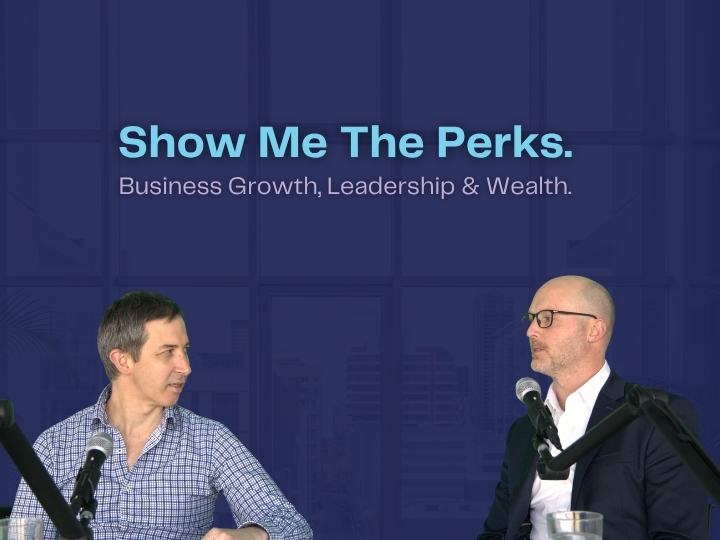
In the latest episode of Show Me The Perks Podcast, host Kim Bigg welcomes Nick Bromell, Director, Perks Audit, to unpack Australia’s new sustainability reporting standards. Together, they cut through the jargon and explain what sustainability reporting really means for private businesses – from scope 3 emissions to supply chain pressure – and why it’s no longer just an issue for large corporates.
In this episode, Nick shares valuable insights on:
Hi everyone and welcome to Show Me the Perks, episode number 25. I’m Kim Bigg, and today we’re diving into a topic that’s generating a lot of noise and confusion for business owners, sustainability reporting. For many private businesses, it still feels like something reserved for large and listed organisations, but that’s changing, whether it’s driven by regulators or customers, financiers or supply chains expectations around sustainability, transparency, and data are moving fast. In this episode, we’ll cut through the jargon and talk about what sustainability reporting really is and why it’s becoming relevant for businesses and how leaders and business owners can start thinking about it without being overwhelmed.
Joining me today is Nick Bromell, Director of Perks Audit. Nick is an audit specialist with more than 16 years experience advising private, public and not for profit organisations across the broad spectrum of industries. Lately he has spent time helping clients make sense of the emerging sustainability requirements and turning them into something practical and commercially useful. Nick brings a grounded perspective to this conversation and helps to demystify sustainability reporting and explain what it means in the real world for business owners who don’t see themselves as reporting entities yet. Welcome to the show, Nick.
Thanks, Kim. Excited to be here.
Excellent. Well, I’m gonna fire into a few questions. Obviously talking about sustainability reporting. ⁓ scenario that some people, some listeners and people in the business community may have been starting to hear more and more about, but wondering how it may affect them. So I’ll begin firing away some questions and then hopefully as ⁓ as the conversation continues it starts to make it more clear for the listeners what it’s all about.
Sounds good.
For people who haven’t been following this closely, what actually are the new sustainability reporting standards in Australia?
Yeah, so Australia has introduced new sustainability reporting standards ⁓ that are being phased in over time. ⁓ you know, we’re in it currently our group one phase in their first reporting window being for the th year ended 30 june twenty 2026. Yep.
⁓ So that the what determines the what group you fall into, there’s three criteria. It’s your turnover, ⁓ total assets and number of employees. So your group ones, they’ve they’ve got ⁓ turnovers of more than $500 mil, a billion in total assets and 500 employees. And then there’s two more groups after that.
Cascades down from there.
Cascades down there with the tail end of it being your group 3. The cutoff for those are basically the same criteria that ASIC and Corpsac use to define
large large companies.
Yeah, proprietary companies. So at the moment that’s 50 mil turnover, 25 mil in total assets and 100 or more employees. There’s a slight spanner in the works in the recent budget and that there is a potential that two of those thresholds being the turnover and total assets are gonna get doubled, taking turnover to 100 mil and total assets to 50. ⁓
But there’s still a little bit to play out there. So
So at the moment it’s group one and group one is over 500 mil turnover, et cetera. So that’s predominantly your ASX listed companies and probably public companies.
Yeah.
And then an occasional few very large proprietary companies.
The big end of town. And and they’re the ones that have been largely reporting for quite a while now hasn’t been mandatory ⁓ under these new standards, but ⁓ certainly as part of their sort of wider ESG reporting, you know, the the E and ESG being environmental where sustainability reporting sort of s slots into that ⁓ part of it.
So the E section?
Yeah, into the E section. So what it’s doing is it’s pulling, you know, other ⁓ smaller entities but still, you know, reasonably large and in the sort context of their turnovers and and total assets. It’s pulling them into the mandatory ⁓ sort of realm. ⁓
And and you what you mean by that is you have, let’s say, large listed companies who are have been doing sustainability reporting for some time, but they drag in smaller businesses because those large companies sort of put out requests to these smaller businesses in the supply chain and say, Hey, we need this information out of you.
Yeah, exactly. I mean the if you’re within groups two and three, you don’t have a choice. But if you’re sort of falling outside of those, there’s still a very good chance that, you know, in order for the the the mandatory reporters to kinda fill out their, you know, particularly their scope 3 and I’m sure we’ll sort of cover that in a bit more detail, but in order for them to get their numbers you know, for their own reporting they’re gonna need to start requesting information from their supply chain and that’s how it’s sort of, you know, the tentacles start to sort of reach out. What it is in in essence though is that, you know, reporting has typically been sort of focused largely on, you know, financial performance. So you’re looking at your balance sheet, your your cash flows and your P&L and what’s really being asked of companies now is to say, well how sustainable is that profitability in the short, medium and long term in the sort of face of sort of climate change and climate events that are increasing in severity and frequency?
So at the moment you’ve got large tier ones who are already in it, 30 June 2026, tier 2 next year, tier 3 the year after, is that right? So inevitably this is gonna crash through on everyone. Anyone who’s got turnover around the fifty mil mark and beyond is going to be in the net. And what you’re saying is ultimately though everyone gets dragged into the net because they’re probably all suppliers or otherwise of yeah. One of those, you know, people within all those three tiers, which brings brings into play these sustainability reporting systems.
Yeah, yeah. Probably worth mentioning as well. This isn’t Australia acting in isolation. You know, it’s really part of a a wider movement globally where you know, it sustainability and climate risks in particular are starting to feed into how businesses are being assessed commercially. ⁓ you know, Australia’s probably middle of the pack in terms of where we’re at on the journey. You’ve got other countries, particularly over in Europe and even New Zealand, that are couple of steps ahead of us and plenty that are, you know, a couple of years behind us, but everyone’s moving in that direction, which I think just adds weight to the fact that it’s not a temporary trend and that yeah, you know, businesses need to be taking it seriously and it’s gonna have that flow on effect.
And that’s a good segue into my next question is some business owners or listeners out there who are listening to this might just think that this is more more government red tape and more cost. ⁓ is that fair criticism?
Yeah, look, I I totally get it. you know, I think any new legislation that increases compliance is always gonna have a level of pushback. ⁓ you know, costs of doing business generally have been going up, you know, compliance beyond this has been increasing, you know, salaries and wages, you know, fuel costs driven by, you know, what’s happening over in the US and Iran and Russia and Ukraine are having that’s having a sort of flow on effect. So you know, I I totally understand the criticism
But the whole world’s moving in this direction. We are and really you know, yes it’s fair criticism, but you know, just the same as anything. ⁓ no change is always difficult for anyone, but ultimately went it’s not as if we’re out on our own here doing
No, exactly. And you know, beyond just a a global movement, the broader market’s starting to sort of look at climate risks in a different light. Banks, for example, now are wanting to know, you know, how resilient is your supply chain in the face of sort of climate change. And insurers are starting to look at it terms of what’s your exposure to physical risks like with floods and bushfires and you know, with this all the sort of science and data backing the fact it’s only gonna get worse. ⁓
You could have a fair criticism towards how how resilient is your business to the ⁓ to a Middle East fuel crisis. Yeah. ⁓ and, you know, people have probably been exposed earlier this year to just how just how exposed they are to that type of crisis, aren’t they? So when you talk about, you know, sustainability reporting, it’s sustainability on those type of factors as well.
So look, I get it, but I guess the message we’ve been trying to sort of push to clients is that you can’t ignore it. It’s not something that’s gonna be here today and go on tomorrow.
So is everyone gonna have a sustainability comment on the ⁓ how affected their Middle East fuel crisis did on their business and whether they ⁓ need to source alternative sources of fuel and otherwise to prevent said issues.
Yeah, look it all feeds into it in terms of, you know, energy costs, but the climate related sort of element of the mandatory standard is really looking at the impact of climate events. ⁓ obviously there’s other factors of sustainability feeding.
Absolutely.
Yeah.
Okay. Jumping on to the next one. Now the scope 3 emissions. And if anyone out there has heard of scope 3 emissions and understands them, their eyes are probably rolling. Why is the scope 3 emissions so controversial in the sustainability reporting?
Look, I think it’s largely because they sit outside of direct control of companies. Now, your scope 1 and your scope 2, reasonably easy to calculate. ⁓ like really because the data sits in house. You know, your scope 1, you’re looking at, you know, energy emissions that you are emitting as part of your operation. So, you know, fuel you’re burning on site in factories or generating electricity bills or Well, you electricity, so that feeds into your scope 2.
So if you’re purchasing electricity in order to kind of run your business then that’s so fuel on site’ll be like diesel or something.
Yeah, diesel in motor vehicles that you own. ⁓ So, you know, that data whilst it you know, you still need to collect it and and sort of bring it in and and process it in a meaningful way to be able to quantify your emissions, it’s the data sort of s you have it and it’s there, it just needs to be dealt with. Your scope 3’s, you’re needing to look at your broader supply chain, which involves, you know in a lot of cases going to suppliers, getting information from them. ⁓ and I think that’s where the resistance comes and you know, there was discussions early on before these sort of standards were actually ⁓ you know, rolled out in full that maybe scope 3 was gonna get sort of scaled back and yeah, really looking at only scope 1 and 2. ⁓ but, you know, for a lot of if companies and I’ve heard plenty of stats sort of thrown around that you know, potentially eighty to ninety percent of a lot of businesses, their emissions are coming from scope three. So without it you don’t really get a full picture of ⁓ what’s going on.
If we were giving a bit of a and on the last episode we had Chris from Des’s Minibus come in now.
Listen for that one.
Yeah, if we have a ⁓ if we ever think through that one we go, okay, so his scope 1 would be the fuel that goes into his minivans and buses and things that are going around, so that’s easy enough. We go grab the fuel. There’s probably more than just fuel, but for those listening that gives them a bit of a picture of what scope one is. Scope 2 would be, let’s say, the electricity’s head office, I guess. ⁓ I don’t know whether there’s any other examples that might easily come to mind, but that’s the ones where you can pick off the number of kilowatts you’re using of energy based off your energy bill or something like that. If he’s planning on transitioning to electric vehicles at any time soon, but yeah, that’ll obviously emissions will move from scope 1 to scope 2 if that’s the case.
Yeah, he’s no longer uses diesel, he starts using ⁓ electricity or kilowatts or something coming from the solar panels on the roof. ⁓
well that’s yeah if if he’s got solar panels on the roof. Ideally you’re in But if he’s having to purchase from the grid from the grid, then yeah, that definitely scope 2.
So think trying to this is me just thinking on the fly, thinking of scope 3 emissions for something like that. Is that where you’re trying to work out how many emissions are involved in the building of his buses? I’m just gonna assume his buses might be coming from a foreign jurisdiction, he’s buying them in. Yeah. I don’t know. He spends a couple hundred grand buying a bus or a minivan. And they come in and he’s got to try to work out, okay, how many emissions are being sent out into the atmosphere from wherever said bus came from. ⁓ in which case he then, let’s say, sends a sends a letter or something to his supplier and says, “Hey, can you give me this type of information?”
How much emissions how much CO2 is generated in the production of one bus? Yep. Yep. Yep.
Yeah, good. So that’s a it’s I mean, I’m just trying to put that into a practical light and perhaps for listeners out there who are thinking they might be getting close to being in the ⁓ into the either tier 2 or 3 if they’re not already in the tier one mix. ⁓ they they should perhaps be starting to think through how they might source that information.
Yeah. And I it’s probably worth highlighting that there isn’t an expectation that from day one your your scope 3 in particular, the data there is gonna be perfect. You know, there w there are gonna be a lot of estimates built into your scope 3 reporting. I mean you know, there are what’s called emissions factors that are sort of you know, basically benchmarks out there that allow you to you know, roll them into your calculations. Don’t mean that you have to go to every single supplier and find out exactly ⁓ you know, how much emissions are generated in in one of their particular units or whatever it is you’re buying. ⁓
but if there’s an in international industry report that says all those type of buses ⁓ average XYZ CO2 level then that might be a good place to start whilst you ⁓you know, over the following years get a little bit better at refining it and getting it.
Yeah, exactly. You start going from using those emissions factors to sort of actually using data that’s pulled from ⁓ you know, your suppliers and as their data, you know, improves it it it in an ideal world, if you’re making decisions that are hopefully trying to reduce your emissions, rather than just using, you know, average rates, you can start using specific rates that if you’re sort of spending money to reduce those emissions, they should hopefully be reflected in your reduced scope 3.
And I guess in theory it starts to make business owners think which supply chain they use, you know, and if you’re ordering buses and I’ve got no idea where they come from, but if they come from Korea or Japan, you’re gonna select you you might even start to think I’m gonna select it from the place that has better CO2 or or lower CO2 emissions. so that they can support their their sustainability reporting.
Yeah, absolutely. I mean that when you boil it down, that’s really the motivator behind is is having that clarity around data and enable businesses to make decisions that ultimately brings emissions in the sort of wider market down.
Yeah. In terms of I mean, some of that’s probably been good discussion around the sort of practical examples of where is it where it gets pulled in, how do just for the people who aren’t already doing sustainability reporting, how might they still get sort of brought into the net or how might how do they technically still get have to do reporting on this.
Yes, we I mean we touched it on a touched on it a little bit earlier, but it’s really if your, you know, larger customers are mandatory reporters, they’re gonna want your data.
If you’re supplying to Coles or Woolworths.
Yeah, I mean Coles is a is a good example. They’ve publicly announced that by I think it’s F29, they want 80% ⁓ of their suppliers by spend, ⁓ to have, you know, I think the terminology they use is science-based sustainability targets in place. ⁓ so, you know, if you’re a if if Coles is one of your customers ⁓ and you want to sort of sit comfortably in that 80% rather than risk trying to sort of squeeze into the twenty percent. You know, if you’ve got targets in place, you you can produce your ⁓ you know, emissions numbers, then you’re gonna be much better placed at sort of, you know, being a preferred supplier than if you don’t. So I think that that that’s one example of how, you know, the big players in town are really over time gonna force more and more of the smaller players to sort of you know, if they wanna play the game with
Well and and it’s not as if you can shift ’cause ultimately, you know, you can’t start supplying Woolworths instead. They’re gonna have similar mandates come through and winery and you’re delivering wine to Endeavour Group or something like that, or Dan Murphy’s or who whoever they deliver their stuff to. I mean, eventually they’re all gonna start to have reporting. So do you think small businesses are ready for these reporting or or what what views do you have on what small business may or may not be getting right?
Look, I don’t think they’re ready. I think they’re starting to have conversations and you know, we’re seeing it pop up more and more. You know, questions are being asked of us. We’re seeing it in, you know, discussions at board levels. I think, you know, probably where it’s lacking is really around, you know, ownership internally. I think, you know, it’s historically been seen as a bit of a, you know, marketing exercise, not really sit a sitting at a board level. I I liken it to a bit sort of of the the journey that cyber security took. ⁓ it started off as largely an IT issue and then over time, you know, it’s really sort of an a standing sort of board agenda item now. And I think, you know, sustainability reporting and climate related risk sort of discussions you have typically been a marketing exercise and I think they’ll progress to being more of a sort of standing board discussion. ⁓ and that’s where it sort of needs to be because, you know, the standards requires that level of governance. You know, below that, I I think finance have sort of largely seen as a ⁓ it as an operations issue. Operations have often seen it as a finance issue and I think in reality it probably sits somewhere in between. You know, finance teams that seem to be the ones that are driving and I think they’re probably best placed to do that because the data largely sits with them. You know, a lot of the information sits within a general ledger, you know, that’s where you can see how much you’re spending on what ⁓ and that you know, the lot of the emissions numbers that fall out of that come directly from
It’s a good place to start, isn’t it? You go through your if you’re a if you’re a business, you go through your general ledger and you pick off your your electricity expense and your fuel expense and whatever else for you. We we can probably work these out to start with. And then you start going into your next layer which might be your occupancy costs or your outgoings or something.
Yeah. Yeah. As I said, there’s there’s definitely some low hanging fruit there. It’s when you start to get into the smaller details that it can be time consuming and that’s where, you know, the data might not be sitting exactly where you need it. It might be spread over different systems, but really starting to build some processes and capturing the data, I think that’s probably where the businesses are sort of lacking the most, just that that governance and then the sort of data readiness.
I think the way you talk about it on the cyber is a is a good way to think about it. Ultimately in if and and there would be some people with this view, if you put your head in the sand for a while as a small business, ⁓ and when I say small, you’re probably bigger than most. ⁓ if I’m thinking about this ’cause you’re supplying the Woolworths or otherwise or coals. But if you put yourself you know, put your head in the sand for too long, eventually it’ll start being a real threat to your business. Because there’s a you know, if if in 2028 or 29 when you said Coals has got that mandate they wanna get there , yeah, you sort of think, Well, they’re gonna get there and they might actually go, Well, if you haven’t done it, we’re gonna look for alternatives who have done it. ⁓ you know, and if that type of loss of client is you know, that can be an existential threat to their business ultimately. I mean if you can’t if that’s a big portion of your business. ⁓ yeah.
So so ultimately, you know, some of these private businesses should be starting to think about it. ⁓
Yeah.
For these for these businesses and you mentioned a bit about obviously starts with the finance departments, because that seems the most logical place. ⁓ you know, what are people expecting these firms to be doing all these smaller businesses? ⁓ what are they expecting do you think the regulators are expecting too much of these small businesses?
I think if you go out and have a look at, you know, your group 1 reports that are either gonna be coming out soon or the ones that have been producing for years, it can be a little bit overwhelming, particularly for small, you know, SMEs out there or, you know, even large privates that, you know, don’t have
dedicated ESG teams and you’re looking at these 100-page reports and you’re thinking, Well, how are we supposed to be, you know, producing anything like that? And I think the answer is they’re not. ⁓ Yeah. You can get seduced by those massive ASC ones kind of. I remember when it first came onto our radar and it was starting to become clear that auditors were going be needing needing to be the ones that are going be providing a level of assurance and, you know, ultimately reasonable assurance on these reports. I started looking at them and I was like, Whoa, it’s a lot of work.
You know, how I’m trying to sort of picture our clients having the resources to do it and I just there seem to be a bit of a disconnect there, but you know, going through the standards and and sort of learning more about it, you know, there’s a level of proportionality that comes into it. You know, there is no expectation that a 50 mil turnover private company is going to be producing the same report Qantas is preparing.
You know, and they’ve even the reports they’re producing now, they’ve they’ve evolved over time. The I there was a training we did where it was brought to our sort of attention, I think it was Air New Zealand’s reports that they showed us one that they had done say ten years ago and versus one they’ve done now and they’re just vastly different reports and they’ve just the level of detail grows over time. Yes, there is mandatory standards here that are sort of requiring a certain level of disclosure and and you know, everybody’s applying those same standards, but that proportionality element allows, you know, smaller business the detail to be proportionate to the the size and operations. It’s probably a good point to be starting at the moment is you’ve probably got past the ⁓ the fast movers who’ve probably had to, you know, be the trailblazers in this space and actually push out⁓ you’re now in a position where there’s probably quite a lot of information out there already and yeah and and discussion around the proportionality. ⁓ you know, to to that end, where you know, if clients came to you tomorrow and said, Where do we start? you know, where where where would someone start? You’ve you’ve you start by having a look at other
reports or look at proportional reports that would suit your business. Where would be That there aren’t a lot of proportional reports out there.
You know, the if you’re looking yeah, if you’re looking at your group threes and and what they need to be doing, there isn’t, you know, the the stuff that is out there at the moment is largely your larger listed entity. So it’s hard to get a real gauge of, you know, what does ours look like compared to what what’s already out there? Yeah, in terms of places to start, I’d I I think really just getting the conversations going internally. Before you start thinking about what’s the report gonna look like, what how do we, you know, calculate our numbers, there’s there’s some stuff to work through in the standards that needs to be reported on as well around you know, having a really good look at what your exposure is to climate risks. ⁓ Conversely to that, also what the opportunities are in terms of, you know, if you’re mitigating some of these risks, you know, how can you turn them into opportunities for potential cost savings or capturing new markets where other players, you know, if you’re acting early, ⁓ you know, you might be able to secure some of the sort of changing sentiment that’s out there. ⁓ so I think getting those conversations going at a board level if they’re not already, ⁓ you know, we’re seeing it more and more. You know, a couple of years ago when it first came on onto our sort of radar, we were the ones having conversations with boards, we’re trying to get them to sort start thinking about it. It’s almost flipped now where it sort of closed audit closing meetings, you know, they’re bringing questions to us. So you can you can see it starting to sort of take hold in the minds of and the discussions at at a board level.
Beyond that, I think it’s really looking at your data, trying to work out what information do we already have, ⁓ where is it sitting, and trying to start to pull it in a sort of central location, you know, start trying to track electricity usage, ⁓ you know, looking at your scope 3, trying to identify who your key suppliers are, you know, you want to get that low hanging fruit and if you’ve got, you know, a lot of your sort of costs centered around a sort of small number of suppliers, really focusing on those, trying to, you know, get some figures working in that sense. And and I think for finance teams in particular, it does start to feel reasonably familiar once you start to get into it, start looking at the numbers and ⁓ half the battle honestly is trying to get your head around all the terminology. I think when you sort of first put your head into it, it’s a lot of, there’s a lot of information there. There’s a lot of terms that just don’t seem like they’re suited to sort of SMEs and you know, they seem more you know, like you almost need an engineering degree or to be a sort of chemist to understand some of it when you’re talking about the different sort of emissions, but you get used to it. You get used to it. There is a lot of software being developed at the moment as well that helps, you know, take that element out of it. ⁓ so
Yeah, I think encourage people to reach out to to their auditor or or to to Nick at Perks to ⁓ you know, if they have questions like what type of software it’s
Yeah, no, absolutely. I think just getting the conversations going and you find thatonce you get a little of momentum with it, it’ll it it grows from there and and yeah, the anxiety around it definitely sort of So you dissolves.
Your practical advice is rather than just purely where where do we start, it’s almost like just start, you know, just just make make some inroads. And even if the only inroads are finding out getting a list of all your suppliers and then listing out all the the low hanging fruit, as you say, as far as your your electricity and your diesel or whatever else you may have, even if that’s the only thing you achieved to begin with, that’ll be a good start. And then you can start asking asking a few more questions here and there of by the people like Nick to to ask about software or things that might just help you collate it a bit better into a bit more orderly fashion and and your first one won’t be as good as your your second, third and fourth ones, but it it’s a start.
And that that’s all that evolution of it’s also reflected in the level of assurance that’s needed on the reports. You know, in the first year of it being mandatory, you know, your scope 3’s, for example, don’t need any level of assurance on them. And that you know, moves over time to a after a couple of years needing that re l level of reasonable assurance. But that’s just acknowledging the fact that, you know, your data’s not going to be perfect initially. It’s going take time.
⁓ and they’re they’re expecting that.
They are. So yeah, my advice would be don’t panic, but don’t ignore it either. ⁓ you know. And don’t also get too bogged down in the, you know, emissions data. there’s a lot of work to do before you get to that around, you know having those discussions with governance, looking at your climate risks, looking at the opportunities and working out, you know, where does it all sit and and where where your main risks are.
Yep. Yep. Fantastic. good advice. ⁓ well that’s all the questions I have for today. hopefully that’s been really good for listeners to think that through. So realistically we are we are yeah, what is today? The ninth of June. So we’re approaching the thirtieth of June twenty twenty six, which is for the tier ones. Tier twos start first of July, in theory. so for all those. And then tier threes, which does cover a lot of ground across Australia. ⁓ and I guess all a lot of listeners and business owners out there should be starting to get used to the idea they’re gonna be asked a lot more questions on this front because there’s gonna be some other Tier 1, 2 and 3 so we’re gonna start asking those questions. but yeah, important to make a start rather than ⁓ keep your head in the sand.
So ⁓ yeah. Any final final items, Nick? Happy with that run through?
No, look I’ve I think we’ve sort of covered the the ground that I was hoping to.
So for any of those listeners out there who want to know more, please reach out to Nick and the rest of the Perks Audit Team and I’m sure they’ll be pleased to talk through any questions you may have as everyone approaches the sustainability reporting with a bit of anxiety, but I think if we all work together it it won’t be too bad.
Yeah. Thanks, Kim. Appreciate it.
No trouble. Thanks a lot, Nick. And thanks to all the listeners. Look forward to catching up with you next time. Bye for now.
The information provided in this presentation is general in nature and is not personal financial product advice. The advice has been prepared without taking your personal objectives, financial situation or needs into account. Before acting on this general advice, consider the appropriateness of it having regard to your personal objectives, financial situation and needs. You should obtain and read any relevant Product Disclosure Statement (PDS) before making any decision to acquire any financial product referred to in this presentation. Please refer to our FSG (available at https://www.perks.com.au/perks-ppw-fsg/) for contact information and information about remuneration and associations with product issuers.
Contact
Get in touch and we’ll connect you with the right Adviser for your needs