Podcasts
18 Jun 2026
Original Article Posted:
May 2026
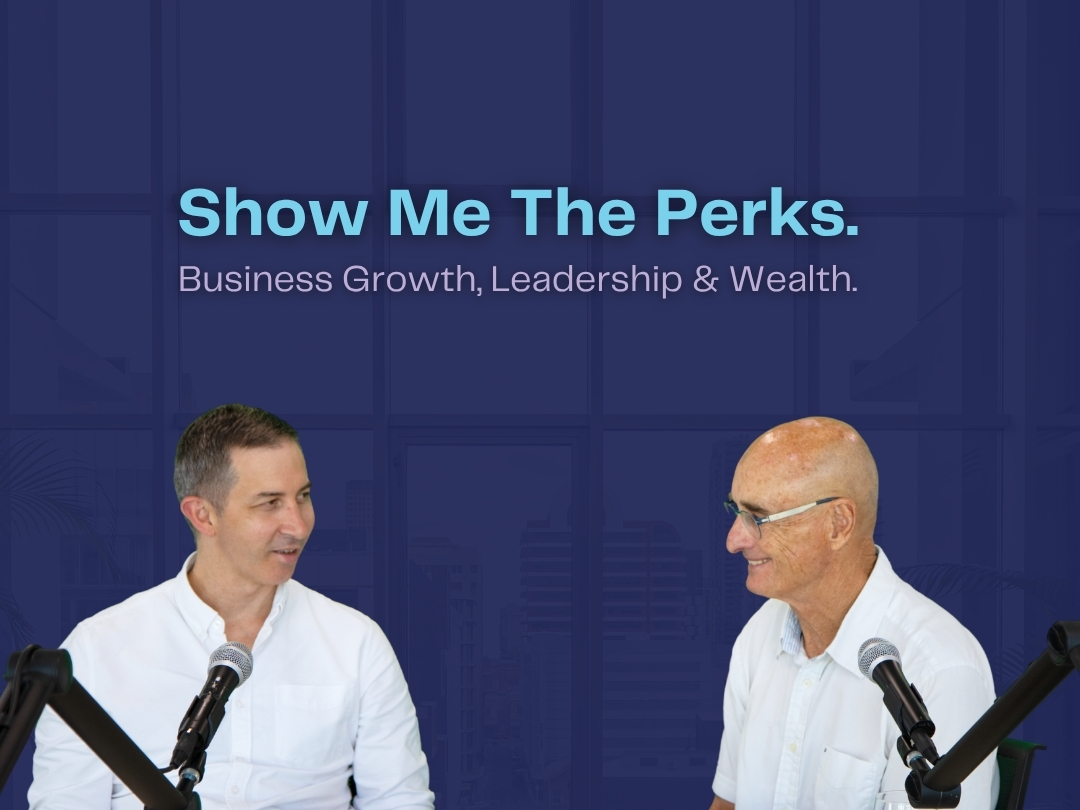
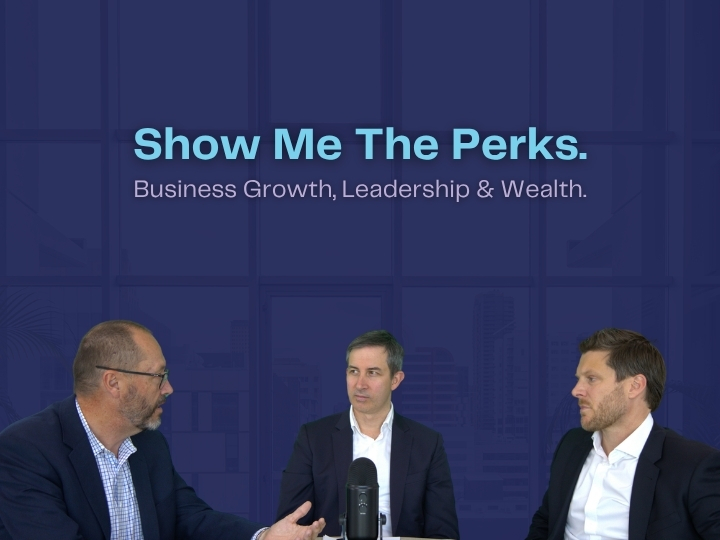
In this episode of Show Me The Perks, host Kim Bigg sits down with Chris Brougham, Executive Chairman of the Des’s Group, to unpack one of South Australia’s most enduring business stories.
From its beginnings as a three‑car taxi service operating out of a spare bedroom in Whyalla, Des’s has grown into a diversified, statewide transport group. Chris shares the defining moments that shaped that journey, including stepping into leadership at just 20, navigating profound personal and business loss, and making difficult decisions about when to hold firm and when to pivot.
This conversation goes beyond history. Chris reflects candidly on:
Hi everyone, and welcome to Show Me The Perks. I’m Kim Bigg and today we’re shining a light on one of South Australia’s most iconic transport brands, the Des’s Group. Joining us is Chris Brougham, Executive Chairman of Des’s Group and Chairman of Country Taxis SA. Chris has been a part of the Des’s story for almost his entire life.
Chris grew up in country Whyalla where his dad and uncle started a small family taxi service and by the age of 13 he was already getting up before school to help count the takings. At just 20 years of age, Chris was suddenly faced with taking over the family business following the unexpected passing of his father. Since then, he has helped grow deserts from a humble country operation into a statewide transport group that many South Australians rely on today. Outside of work, Chris is an avid Port Adelaide football club supporter and a long-distance cyclist requiring a fair bit of commitment and resilience and ability to look beyond. Welcome to this podcast, Chris.
Thanks, Kim.
Good to be here.
Excellent. So today is a little bit different to some of our previous podcasts. It’s really great to have a firsthand experience of family business and all the ebbs and flows and the challenges that come with that.
Really pleased to be able to have Chris come on the show. To begin and kick us away, Chris, can you give us an overview of the Des’s journey, including what were the key turning points and what shaped you from a small country taxi service into one of South Australia’s most iconic transport brands?
Cool. Big question for 60 odd years, Kim. Thanks for that.
60 years old Des’s group, is that right?
1963, we’re 63 years old.
So 1963, it started in Whyalla. Yes, it did. Whyalla would have been an interesting place in 1963. It was a place that was on the cusp of growing significantly. And so it was probably a good time to start a business in hindsight and looking back on it. It started with Uncle Des and my dad. They were both working in the Whyalla bakery at the time and needed some second income.
So taxi driving was there and there was an opportunity to start the business. It grew fairly rapidly as did Whyalla. And the starting process was straightforward country taxi service in terms of, was there more to it than that?
They actually bought a small cab company that had three taxis in it, I think from somebody who was retiring or moving out of it and moved the initial radio room into my grandmother’s spare bedroom.But it grew very rapidly from three to.
And this is purely in the town of Whyalla?
Just in Whyalla. Fantastic.
And what sort of cars are you using in 1960s or perhaps I should say in the 70s when you’re growing up perhaps?
The initial cars at the time were FB or EK Holden sedans, black ones. As I remember seeing them, spare fenders hanging up in the shed at home.
And early on, what drove the business model? Is this people who couldn’t afford a car, who were looking for a taxi service to travel because at that stage cars weren’t necessarily something that everyone had access to? Or were these for other reasons? ⁓ What was the driving force behind the demand for a taxi service in Whyalla?
Whyalla grew so fast in the 60s. The shipyard grew, the number of employees who were living in the single men’s quarters. At one stage was up to a thousand. I mean, all these guys, most without cars. That circuit after work between the single men’s quarters, the air hotel and the other two hotels in the main street was pretty significant. As the town grew, so did the shopping centers. And it just seemed like people wanted to go and do. I mean, at one stage in the late…mid 70s, mid to late 70s, there was over 50 taxis in Whyalla.
What was the population of Whyalla around then?
Officially, I don’t think it got much more than about 30,000. We think unofficially it probably got closer to 40.
Yeah, which is bigger than what it is now. ⁓ now it’s half that size and now ⁓ it’s 20,000 maybe.
And does Des still have a presence in the Whyalla town now?
Des’s as a business too, Uncle Des doesn’t, he passed away a couple of years ago. Yeah, sure.
Yeah, no, in, in, in 2026 now we’re operating about 25 taxis probably still. But we also operate the local route service buses. We’ve got 25 buses that are operating there and a Hertz car franchise as well.
And at some point you would have shifted from Whyalla and surrounds into
wider SA, can you explain the process? I’m, you know, was this before or after you took over the business? So you took over at the age of 13, you were helping count the takings, but you didn’t get sort of, how do I say, more involved in the running of the business until your father passed away. Is that right?
That’s right. And that was at the age of 20. As a 13-year-old, I went in five days a week in the morning at 5.30 and spent two hours in there counting the driver takings processing them. And I have very fond memories of my grandmother making Vegemite toasted fingers, for example, fighting my uncle who got the last one. From leaving school at 16 or so, I spent 12 months working in the business, mostly in the workshop and just helping out before I got an accounting traineeship.
Did you get an apprenticeship of some kind?
An accounting train eship with a local public account.
Fantastic.
And I was working there and as part of my job, was also to work on my dad’s business. you know, and I was always around it. And then when dad was killed in 1974, was the first thing uncle Des said to me, I reckon just about, you know, you have to take it over. said, do I?
And how did you feel at that moment when you’re asked, you you’re a 20 year old who has done an accounting traineeship and you’re obviously passionate about the business, but not thinking this is on the cards. How do you feel at the time?
Apart from the shock about my dad’s passed away, in terms of taking it on, I was always, I wasn’t a normal 20 year old. was a much older 20-year-old so, it didn’t scare me. know, the first 11 months of running the business as a 20-year-old were a lot easier than the second 12 months because I turned 21 and all the people in the business suddenly realised how young I was. So then they gave me a lot more curry.
That’s true. I guess they give you a chop out for a while. Now, was this the first of the two key turning points in the business?
Certainly. ⁓ Dad passing meant all sorts of restructuring and rearranging and you know, and it caused a fair bit of grief within the family as well. Uncle Des, for example, worked out really quickly that I wasn’t my dad and he didn’t think he could stay as a shareholder involved in the business. So, you know, I had to go talk to the bank and borrow some money and buy him out. In hindsight, it was probably a pretty smart thing that I did, but it was also sad at another level.
The family, you know, my mother went off the rails. She was working in the business full time when dad died and then she disappeared. So you know, and then, and then I guess once, once I got settled down into the business, it became about what opportunities come along. And you know, the first one was probably a little three car cab company in Port Augusta, which was just up the road. It was closely followed by buying out the opposition in Whyalla at the time. There was opposition there and merging those two. Then we kind of went through a bit of a phase where we stayed where we were and I got more involved. At one stage I got involved with the South Australian Taxi Association in Adelaide. I used to come to Adelaide and just talk to people. But it was about where opportunities came and as opportunities presented then I’d look at them. But the next, I suppose the next, well no before that, there was an attempt by another local family in start an airline. And they failed in about…a very short space of time. And my brother, Kim, had inherited well and truly his father’s flying genes. Not so me, but he was working in the business at the time. And together we looked at this opportunity and we took it on what had been essentially started by somebody else, turned it into Whyalla Airlines and had 10 years of that. And the business, I guess, while we had Wyler Airlines, the business had enough challenges and excitement in it.
When the next major turning thing, if you want, and you know, you go, this is terrible. Dad died, there’s the first key point in a plane crash. And then Whyalla Airlines had South Australia’s worst aviation tragedy. And that became a key turning point for us because it meant, apart from going through all of the grief around that, the fact that airline demise could have brought Des’s to its knees as well, the whole group.
It didn’t, but the airline got resolved over a period of about three years. And out of that, as a family and a group, we changed our focus. So having lost what I would have described as maybe the sexy part of the business, running a little regional airline is more sexy than running a regional taxi company, we looked for other opportunities and out of that in a very quick succession, my youngest brother, Brett, who was working in the business at the time and quite savvy in all sorts of ways, orchestrated Des’s transport, which took on the Whyalla route service work.
When you say route service work, where’s this work going to?
Bus work in Whyalla.
This is stepping a little bit away from the taxi service. Stepping away from taxi. So suddenly we’re going into big buses to run around town, which fastly added up to buses going up to mines and different things. But the same time we started that, I bought Groovy Grape Getaways out of receivership, which-
What sort of year are we talking here?
2003.
Yeah, 2003-2004.
Groovy Grape was a ⁓ touring company taking backpackers on multi-day tours. Yeah. Essentially, but also going daily to the Barossa Valley. Yeah. So we bought, we started Desert Transport running the buses in Whyalla. We bought Groovy Grape and not long after that we bought EasyRent Mini Buses who was a bit like vertical integration. So we were hiring buses from him, from Jack and then he decided he wanted to sell. So it kind of, you talk about significant events, the demise of Whyalla Airlines actually led to a bigger, diverse group, which forced us to look at other things.
So if I’m walking through the timeline of events here, so we started taxi service in 1963 in Whyalla with three taxes. You have a key event in 1974. As sad, sad as it is your father passed away, which was a key event because that in essence led to you having to step up.
Yep.
Shortly thereafter you find the means to sort of purchase the shares from your uncle as well in the same motion. And then all of a sudden at the age of I’m going to say less than 25 at least, you’re now the owner of a relatively large small taxi service. It’s a bit of an oxymoron, but a relatively large group in the growing township of Whyalla at the time. So it would have been a busy time for a 25-year-old to be running a business, I would imagine. And from there you have, you also have Whyalla Airlines comes on board in let’s say the, I’m gonna say the late 70s. 1990.
Okay, that’s quite a bit afterwards, so 1990. So, and in between, you’ve got, you’re purchasing some taxis in Port Augusta, you’ve got, you’re purchasing a Whyalla opposition out, you were doing various different things. And then by 2003, you purchased Groovy Grape. How do we step forward in motion from Des’s group becoming a, how do I say, a more household name within the CBD of Metro Adelaide?
It’s both about opportunity and drive and what was motivating me. So for me personally, I got to the stage where I was probably just a little bit bored, if that’s the right word of being the big fish in the small pond. And I was tempted to become the small fish in the big pond. I had long had relationships with the Adelaide tax industry, I’d been invited down to sit on the association meetings. And I was doing a number of things and it was really about just trying to find that opportunity to make the move. And I did that in 1993 and I had a rigid crack at trying to become Des’s cabs in the Adelaide taxi market and show the taxi industry how to do it. We had some things that were over and above the taxi industry at the time already going in while we were very much about training our drivers. We were about quality, we were about uniforms, we were about uniform cars, all sorts of things. And I thought I can do this now. My timing could never have been worse.
1993 was a recession in South Australia. It was actually about the same time that Blue Plates came into being in Adelaide.
Tell me about blue plates.
Blue Plates were hire cars that were nibbling away at the tax industry and basically aiming for the top 10 % of what taxi were doing. Now I came to Adelaide looking for the top 10%. So I was on a bit of a collision course. But it was also about the same time that I got interested in Toyota, Turago, and eight-seater taxi. ⁓ I decided that Adelaide could have some of those.
So you pivoted toward seven and eight-seater taxis.
I put some eight-seater taxis on the road. That had the, it was the catalyst, suppose, or the seed that then got people with bigger vehicles, specifically maybe 12-seater Toyota commuters to start off looking at me and going, can we work together? Because I’m sure you’ll get people ringing for a maxi taxi that actually wants something that’s bigger.
And really Des’s minibus grew out of that grew out of that, you know, and it didn’t take me long to realize on Monday morning that I’d get a lot of complaints about people who couldn’t get a maxi taxi because we didn’t have enough to cover the whole town, the whole city of Adelaide. But people would ring also saying I had a minibus. And it was great. I know which phone calls I want on Monday morning. So get rid of those eight-seater taxis and them all in the minibuses.
You almost stumbled upon it in a sense as in that the lack of success as a result of blue plates led you to go towards these and then all of sudden you found you’re on a good thing.
Yes, yeah, it is about being flexible, about being able to move, about not getting locked in on something and about knowing when the door goes a different way, you’ve got the guts to go down a different path.
And we’ve talked a little bit and talked through the history of Des’s here. How do you describe that in terms of the running of a business and being able to pivot? How do you know when to stick firm on your belief that this is going to work versus pivoting towards something else? Is it a gut feel? I mean, historically, have you had a board or otherwise that sat together to make these decisions together? How do you make these decisions?
There’s a fair bit of gut feel in it. There is a bit of going, I wonder what could be next and where do I go? What am I looking for? And then I go now, am I going to do this hostile? Am I going to go and try and start up something from scratch? Or am gonna try and pick something up? I think at the other side of it, it’s about what are the numbers telling you? And if you can lose money for a while trying a new venture, if it’s just not going to come good, then you’ve got to work out what the exit strategy is. And also be prepared to run when, put the spinnaker out when things go well.
Yeah. Excellent. And that’s good segue into, mean, Des’s is, you are now the chairman or the executive chairman of the Des’s group, but there’s a fair degree of, how do I say, non-family involvement in the running of Des’s group, which is a lot of our listeners and a lot of the clients of Perks are family businesses. And it’s a constant sort of, how do you say, it’s a push and pull feel towards, you know, often they’ve created these wonderful businesses, but you got to know when to let go a little bit and allow, you know, some independence to come in, in the running of your, of your business. How did you go down that path and how did you feel? What were the challenges that came with it? Because I’m sure there’s lots of people who’ve contemplated it and it’s a nervous undertaking.
At one level, if you don’t start looking outside the family, unless you’ve got a particularly exceptional family, and there’s certainly business around that have got them, ⁓ if you don’t start looking out, then you’re going to stifle what you can do.
Stymie the growth.
Totally stymie it. So, you know, in, in, in our case, you know, was doing the head count just recently and there’s probably been 30 family members in 60 years that have worked in the business spread over four generations. Today is only two and one of them is my nephew in the workshop. So how would the business operate today? It’s not running. It’s not doing what it’s doing today because of me personally, it’s doing because of the managers that I’ve got. So Louise in Whyalla, Simon in Adelaide. The minibus journey wouldn’t have happened without Carol Mundy at the time. ⁓ There has to have been people on the team.
So you embrace the new expertise and the new thoughts?
You have to go looking…
If you had anything to say to other family businesses out there who were contemplating that type of thing, what’s the first step you take in that process?
Look, firstly, you don’t employ family just because they’re family. So everyone’s got to stand up and get their spot on merit. When you haven’t got family members who can get their spot on merit, you got to go outside and it has to be almost as quickly as soon as you realise you haven’t got it, you got to go and do it because otherwise you’re holding the business back.
Do you establish an executive board or committee to some extent to drive the ultimate decision-making to allow those managers that you put in place to have a level of accountability?
We’ve changed ever so slowly at that level. I can remember in the 90s and the only people I had to answer to were my brothers and my mother. And, you know, I’d sit down and say, we lost a million dollars last year. And they go, ⁓ yeah. And I’d say, it’ll be all right. I’ll fix it up next year. And that was the end of it. Whereas now I’ve got other people involved. They’re not going to say, you what? How are you gonna do that? And they’re gonna know about it before it gets there. it’s…
Adds a little of financial discipline, if you like, that you may not have had
It does. Yeah.
And financial discipline in a good way, as in as, I mean, you’re now the Executive Chairman, do you come to appreciate the, how do I say, the rigor or the rhythm that the financial…he can run to in terms of feeding you the right information.
Kim, actually, I love being questioned about numbers. I love it when somebody in the team can find the numbers and point out what the problem is. Cause mostly, you know, I’ve been around all my life and I know, I can look at it I’ll know when they’re telling me the wrong thing without even going and looking, but you it’s, it’s, it’s really good to get people involved. And early on, ⁓ I’m going to say sharing the financials with non-family members was something that didn’t happen very often. But once I got the confidence to do it, I realised I got a better team.
Yeah. And I mean, look, you obviously had your original qualifications as an accountant, which we talked about. Is that a, you know enough to be dangerous, I’m sure. When people bring forward ideas around the financial numbers, you know, you know enough to know whether they’re taking the mickey out of you. If they don’t truly understand their numbers, you know enough to know, I would imagine, which is a nice advantage to have.
I know which KPIs to put my finger on. know where it goes. And sometimes you get somebody who says, well, what about…? And I go, ⁓ I’m not really sure that’s going to make any difference at the end of the day. then it’s about staring them.
A combination of your accounting experience coupled with 50 or 60 years in the business is obviously going to hold you in very good stead. So just to describe for the listeners, what is your current sort of executive team or how many people are in there and do you have an executive board and an executive team?
At the moment we’ve got two non-family members who both, they’re executive. Executive level. And so… ⁓two very capable, we got about three underneath them. And then we answer to the chair of the advisory board.
Okay, so you have an advisory board, which is made up of let’s say yourself and how many others?
My wife and two others.
And two other non-family members.
My wife is ⁓ a lawyer who facilitates, operates in the governance area.
That’s an excellent combination. Accountant.
And keeps me on my toes. Yeah, absolutely. Absolutely.
And how do you look at the, you know, when you, you’ve probably seen enough, how do I say, forecasts and year end reports and growth trajectories in terms of where you want to take the Des’s business moving forward. How do you contemplate that in light of having a board and having all these years and also just contemplate the, you know, the what comes next for Des’s in terms of the succession and where to from here. How does the board contemplate those things?
A lot of the discussion at the moment is focused around what does Chris want to do personally. It’s getting to my exit day rather than, you know, or my wine back day.
And for the listeners who can’t see you, and I’m not going to ask Chris how…how old he is, but if you work out that he was 13 in the 60s or 70s somewhere, then he’s contemplating succession.
Yeah, I’m over 70. A lot of the drive for where the business is going to go now is coming from the managers, particularly the younger ones. You know, if you replace a couple of them with someone who’s in their late 30s and 40s, particularly…Simon Clinton now in Adelaide, he’s got ambitions to just keep growing the business. And, know, I find I’ve just got to one, get out of the way at one level and two, try and facilitate that to make it happen at the same time. Well, I’ve got one eye on, you know, what that succession plan looks like for me to get out the door.
Embracing it. So do you take a higher view than, you know, do you have to sometimes, you know, zoom out from your own world to try to take the higher view of the Des’s group to try to think what’s in the best interest of the Des’s group, which will commonly be also in your best interest, but occasionally they’ll be slightly.
I think it’s one of the real pluses for me getting on my bike and going for five weeks for a ride across the country, you know, you get plenty of time to think about all sorts of things and yeah, parachute out to back to front parachute out so you can look down and look back and then come back in with a really clear, fresh view. Fresh view of where you want to go.
And are you embracing the ⁓ style of bringing the management into the ownership in some way or in the future to sort of support the future growth?
We’re currently contemplating that. It is about what’s that exit and how best to do it. Does it make sense to bring management in its shareholder level if in fact you’re trying to find a bigger buyer to take the whole thing. So you know we’re just still going through that process.
And one of the when you get to this stage of your journey if you like, so it’s all well and good for people like myself as accountants to ⁓ be very rational and be very sort of without emotion, if you like, when we talk about these things, but this has been an enormous part of your life. And there would be lots of our clients who think the same where they almost their identity is shaped by the business they’ve created. How do you, how do you contemplate that? And how do you think about that? know, do you, do you warmly welcome it? Do you look at it and feel like it’s a bit of a weight to carry?
How does that feel to you? You go through phases where you think it’ll be easy to walk away. then you go through phases where, know, it’s not, we’re currently going through a process with our Whyalla a general manager who’s worked for me for 36 years. She’s been the general manager in Whyalla of 20. Before her, my younger brother was in the chair. He passed away in 2007. Before that, it was me before that was my dad. So you’re going when Louise went in there, that was the first non-family member to go in there. It’s been four people in that, in that chair for over 60 years. Now we’ve got to bring somebody new in to go in that chair. Am I a little bit emotional about that? Yeah, I am. You know, and the closer it gets, push comes to shove, it’s a bit like going, I better get the right person. All that sort of stuff.
It just serves to highlight how important the business has been for you both financially, but also you know, as a challenge and a, you know chasing that challenge of what comes next as far as your business journey and doing the best you can for the group.
Kim, I don’t, mean, think it’s important to say, I don’t really think that for 30 years or so being in the business that I really worried overly about the bottom line. I was more concerned about what we were doing, why we were doing it, how we were doing it. And as long as we were surviving and I was getting paid, that was fine. The last 20 years, I’ve probably been a little bit more focused, hang on, probably should be putting some, some money aside and, know, my, my wife has been good about reminding me about that too.
So what do you put that down to as in when you were younger, did you just think that you had lots of time and it didn’t matter as much or were you of the view that if I continue to do all the right things and have the right values and the right settings in place and, have a long-term outlook, the rest will take care of itself.
I think there’s a bit of that. also I think it probably, know, 30s, 40s, you’re a little bit, you’re doing other things in your life. You’re kind of, you know, doing a lot of work, but not really worrying about it.
You think you’ve all the time in the world.
Yeah, you certainly do. then, some, but someday you go, oh, maybe I, maybe I should, you
I don’t have as much time as I
Back then you didn’t have to put any super. You’ve had a bad year. didn’t.
Super, sorry. It didn’t really exist. Yeah, or thereabouts.
Yeah. the same time as those blue plates turned it up. Maybe there’s a cynical connection there.
What continues to motivate you? This is a magnificent business and it’s so nice to hear about it. Excellent South Australian story. What continues to excite you? What do you love about running the business and being the executive chairman of the Des’s Group after all these years?
Look, I guess I like seeing what the people in the business are doing ⁓ and those that are growing and making a difference. That excites me. I don’t like it when I see things in the taxi industry that I don’t like. I don’t like it when I see the…you know, what happens with the ride share competition or how the industry responds. That stuff disappoints me. I still get passionate about access cabs and wheelchair taxis. You know, in the early years we didn’t have any. In Whyalla there was a disabled people’s international organisation with volunteer drivers doing all the wheelchair work. And so I refused to go there even when other cabs were.
But once they came and asked me to do it and do it commercially. Well, now we’ve got a much higher ratio of wheelchair cabs. I’m passionate about having a service provided to people who need it. And I’m also, I suppose, a little bit attached to the Des’s brand. So you know, when Chris moves on, I’d like to see the Des’s brand keep going. Simon, Clinton, he’s adamant it’s going to keep going as long as he’s got a say in it. It depends on how we exit and how much he either gets a say on that or who the new owner does something.
And those comments you make there and you give a strong indication of your values and the values of the organisation, do you think that’s embedded in the reputation and how people view the Des’s Group from the outside?
Look, I would really like to think so. ⁓ From time to time, I’ll get, we’ve got a number of Indian owner drivers, taxi owner drivers in Whyalla and they are very concerned about what happens to the business if I’m not there. If I’m not there personally, you know, it’s that kind of, because they, if I say something to them, they believe me, they trust me. What happens if Chris is not there? You know, it’s that sort of thing. So I think my personal values are very much in line with the businesses and then are recognised by the people within the organisation. And you’re hopefully going to hire people who share similar values and whatever the succession may end up being, I’m sure that’ll be a factor in how you contemplate where it goes from after you’ve handed over the reins.
You will.
Yeah. Excellent. All right, well, it’s been fantastic to catch up with you, Chris. It’s really enlightening to hear about the journey. I’m hoping that a lot of listeners have gained a lot from that discussion. ⁓ There would be a lot of family businesses that are going through similar challenges ⁓ and hopefully they take something from today’s discussion to ⁓ use in their own business. And yeah, thank you again for coming in to chat with me and I really appreciate it.
Enjoy the chat.
Excellent.
Thanks, Chris.
Thank you.
The information provided in this presentation is general in nature and is not personal financial product advice. The advice has been prepared without taking your personal objectives, financial situation or needs into account. Before acting on this general advice, consider the appropriateness of it having regard to your personal objectives, financial situation and needs. You should obtain and read any relevant Product Disclosure Statement (PDS) before making any decision to acquire any financial product referred to in this presentation. Please refer to our FSG (available at https://www.perks.com.au/perks-ppw-fsg/) for contact information and information about remuneration and associations with product issuers.