
Podcasts
11 Sep 2026
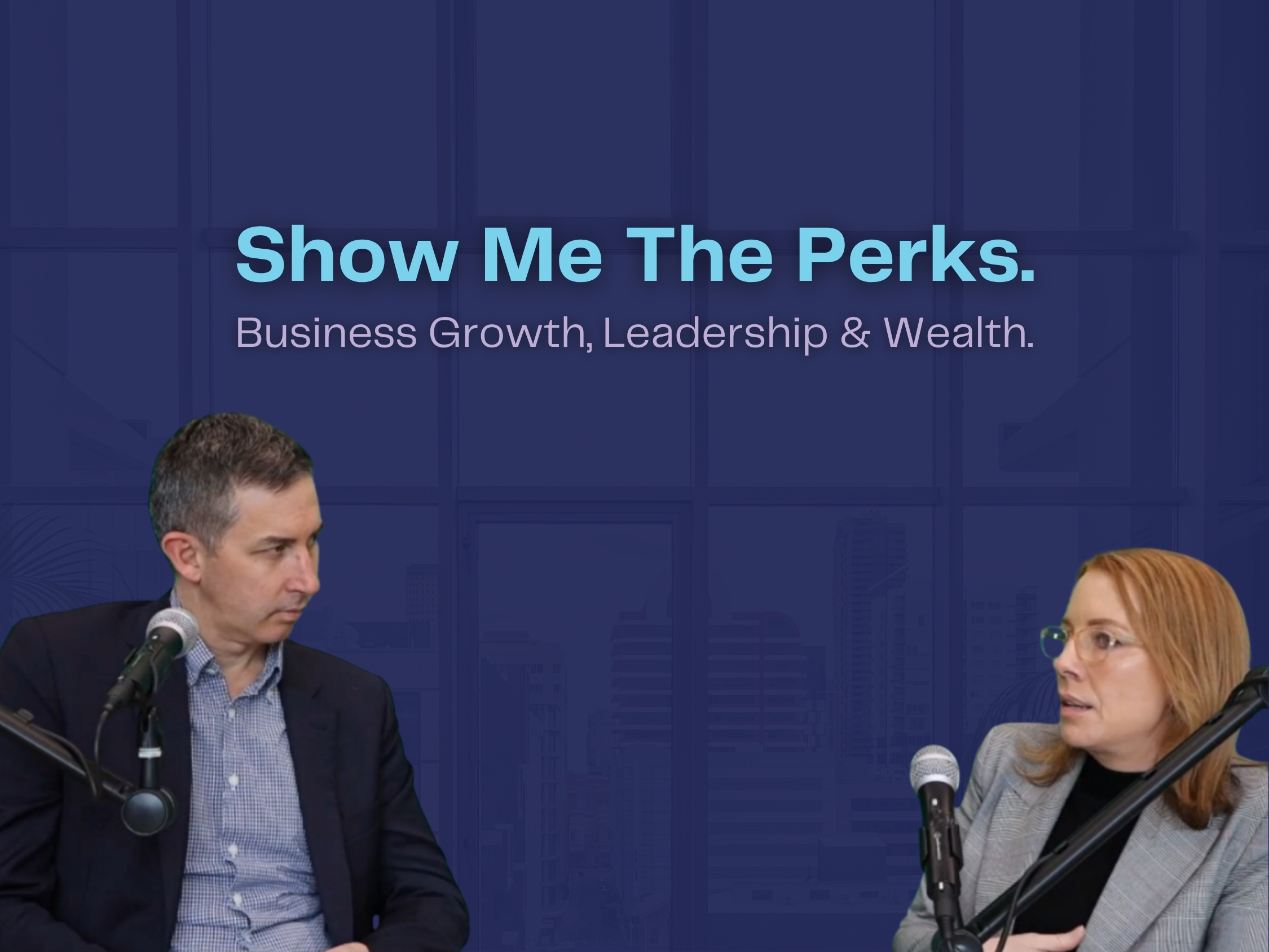
Hi everyone and welcome to Show Me the Perks. I’m your host, Kim Bigg, and today we’re exploring what it really takes to build a people-first business and why culture, benefits, and retention are becoming such an important priority for Australian businesses. With the spring hiring cycle coming up soon and many businesses moving into planning season, it’s a timely opportunity to look at how employers can create workplaces that attract the right people, support their teams, and build stronger long-term engagement.
Joining me today is Collette Ordish, Associate Director from Perks People Solutions in HR Consulting. Collette brings valuable insight into team culture, employee benefits, and the practical steps businesses can take to create a workplace people want to be a part of. Collette works closely with businesses to help them think more strategically about their people, culture, and employment experience. With a focus on practical people solutions, Collette brings insight into what employees are looking for, what employers need to consider, and how small and medium businesses can strengthen retention without losing sight of the commercial realities. In this episode, we’ll unpack how businesses can design a workplace experience that feels genuine, competitive, and aligned with their future goals from culture and benefits through to communication, flexibility, and leadership. Welcome, Collette. That was a big intro. Thanks, Kim.
Welcome to the podcast. We have several questions to get through today, but I’ll start with asking Collette to give us a little insight into the well, I guess Collette’s role in Perks People Solutions, but also maybe a little insight into your background as to what your history has been work-wise, career-wise, and how you’ve come to be with Perks.
Sure. So without giving away my age, I’ve been I’ve been in HR for quite a long time. So the majority of my career was working in internal HR roles. And before joining Perks, I was the head of HR for the South Australian Health and Medical Research Institute, SAHMRI. SAHMRI. Otherwise known as the Cheese Grater Building or North Terrace. North Terrace for the South Australian listeners.
That’s right. So then yeah, I moved over into consulting about four and a half years ago. And yeah, really enjoying the diversity of working with lots of different clients. Most of our clients are small to medium-sized businesses and family-owned businesses, all with their own unique challenges across lots of different industries. So, yeah, I’m really enjoying being able to, you know, I guess expand and extend my depth of knowledge and experience in HR into all of those businesses and industries. But the real beauty for me is that I’ve been able to really specialise in this part of HR called organisational development, which for the layperson is basically the proactive side of HR rather than just the reactive. Working in you know internal HR my entire career, a lot of time gets spent in, you know, putting out fires and you know dealing with reactive HR issues. It’s been really wonderful to be able to now kind of specialise in the in the proactive space, which is really helping, you know, the clients that we work with to have an employee experience where people can really thrive. And obviously that benefits the people in those roles but equally or I would argue even more so benefits those businesses because obviously where people are engaged productivity is higher.
Absolutely. No, that’s an excellent summary. And just to for the for the layperson listening, I shouldn’t use terminology. So HR for those who are listening is human resources. I guess I’m happy to give away my age. I when I started at Perks twenty five years ago, we didn’t even have an HR person, you know, at Perks and now we have a have a whole team and HR, you know, it’s become quite ingrained in small businesses and society and looking after your people has become a real
I guess a real industry and a real edge that businesses have when they do look after their people and look after them well, they get a lot of benefits. You talk a bit about the reactive and proactive, your position within Perks People Solutions is on the on the proactive side, which I would imagine is a lot more positive, and a lot more enjoyable perhaps. But why is being proactive with your HR so important rather than just reacting when issues come up?
Yeah, it’s super important. Obviously prevention is better than a cure, right? So and we know that, you know, with industrial relations laws that are, you know, always evolving and changing. There are a lot of risks out there for business in relation to their people. So rather than focusing on mitigating risk, actually, if you get in front of all of that and you focus on the proactive side of HR, which is really engaging with your employees, understanding them well, you know, listening, being able to, you know, help motivate them and help them thrive, then you’re actually also going to be, by way of doing that, you’re going to be mitigating your legal risks as well. So but also you’re not just going to be mitigating legal risks, you are, as I mentioned before, going to be seeing or reaping the rewards in seeing employees putting more effort into the work they do and therefore you know your productivity will be higher your retention you know you’re gonna retain your good people if there are people that aren’t perhaps performing they’re gonna stand out in that type of culture as well and you yeah you’re just gonna have a more profitable business at the end of the day.
And for those listeners who may you know who may not have used someone like yourself for organisational development, you know, some of those issues arise when, you know, if they’re sitting there thinking I’ve got these challenges with employees, I don’t know why I’ve got all these challenges. Sometimes they come up and they’re probably scratching their heads thinking, why does why does this keep happening? I mean, to some extent being proactive with your HR, you know, it is a preventative measure, and you’d almost be encouraging those listeners who are having those issues to say, you know, rather than just purely focusing on you know, why the employee doesn’t you know, doesn’t react to things the way you think they can, I mean, being proactive and on the on the other end of it can certainly help. I mean, how do you look at that from the perspective of people who want to be running businesses that are considered people first and what does that actually mean, in terms of what they can be doing to improve their business?
Well, I mean, this is gonna sound really simple, but to be honest, none of this is real rocket science. It comes down to listening to people and really understanding, you know, what is it that they need. And, you know, it’s not one voice. Each voice is gonna be different. Different people are motivated by different things, different people come with different strengths. You know, as we know as humans, we have a lot more going on in our lives than just work. So sometimes there are things outside of work that are impacting us.
Simply having a relationship with your people, so leaders having relationships with the employees so they can really understand what’s going on and create a sense of psychological safety so that people do feel safe speaking up if there is something that isn’t going so well for them or if they’ve made a mistake or you know if they need to speak up about something. The other thing Kim that I want to point out is you know I’m talking about proactive HR.
A lot of listeners are probably thinking, that’s all fluff and probably thinking this podcast isn’t for me. But I wanna just Stay with us. Stay with us. Stay with us. Because I want to just highlight that actually when it comes to the reactive side of HR as well, the way legislation has changed is that there are more positive-duty obligations placed on employers now than ever before. And so there’s, you know, you’ve got your duty of care under the Work Health and Safety Act that’s existed on for a long time.
You’ve now got a positive duty obligation under the Sex Discrimination Act to prevent sexual harassment. And then also since 2022, there’s been these things called psychosocial hazards that sit as their own code of practice under the Work Health and Safety legislation. So that’s another legislative requirement on employers. And really, when we look at all of those things, it’s about changing the mindset of reacting to issues when they happen to preventing them from happening in the first place. So all of the those, you know, changes to this legislation is essentially all about changing, you know, employers from being reactive to proactive.
And when you say positive duty for the for the lay person, positive duty meaning the employer has an obligation to initiate this type of training to make sure that they are you know seen to be putting measures in place to prevent issues from arising rather than just saying, I’m gonna do nothing and when the issue arises I’ll deal with it then, that’s no longer enough.
That’s exactly right. And that can be training, it can be having a listening strategy in place and that sounds like fluff, but basically that might be an engagement survey, one-on-one, you know, sessions with your people. Particularly your leaders. Yeah, onboarding surveys, exit surveys, things like that. They’re simple enough to be able to do.
But it you know it’s more than that. But yeah, having just simply having a policy and then reacting to things isn’t enough. So people first is really just about, yeah, really listening, but also you know, actually genuinely showing that you care and you have good intentions for your people and making sure that they’re aware of that through, you know, your consistency as an employer, but also in the way you establish trust with your people. So what are those you know, if anyone’s listened to Simon Sinek before, you know, you’ll hear Simon Sinek talks about trust as being those little things, consistent things that you do every day to send that message to people that they can trust you. So it’s following through on what you said you’re gonna do. It’s it’s actually showing those good intentions on a daily basis.
It’s a good segue there from trust and care into why culture is such an important. So for a lot of listeners who are running businesses or involved in businesses, you know, why is culture such an important part of attracting and retaining good talent, particularly for SMEs? Well, we know that there’s a lot of competition out there. We also know that Word spreads very quickly if you’re an organisation or a business that doesn’t have a great culture or isn’t great to work for.
Particularly if you are located in Adelaide, one thing that we know about Adelaide is that it’s like a little small country town at times. Yeah, where it doesn’t take very long to spread. So having a good culture that will be, you know, sometimes you might not be able to afford to pay, you know, the same salaries as some of the competitors, but you know, salary isn’t necessarily the only thing people are looking for. They’re looking for somewhere where they can go to work and actually feel good about working there.
Because there’s a good culture. You know, people feel safe, people feel like they can thrive, people feel like they’re able to bring their best to work and not deal with, you know, we’ve got enough to deal with in our personal lives, we don’t want to have to deal with that sort of stuff at work. Absolutely. Where do you see people getting culture wrong or retention wrong for that matter, but mostly culture? How do they get it wrong? I think you know, I’ve seen examples before where organisations have put this effort into doing really big culture initiatives, implementing big culture initiatives and putting, you know, putting up fancy posters on walls with values and and spending lots of money on workshops but not actually following through with the day-to-day consistency in the leadership behaviours that I’ve already spoken about. Trust and the care. Yeah, it is like I said before and I’m probably going to keep saying it throughout this whole podcast. It’s actually not rocket science. It’s it’s quite simple stuff. It’s about trust and care and demonstrating those behaviours on a day-to-day basis for your people. It’s not just about having the you know you know employee benefits in place, they’re a bonus. Having organisational values in place, yeah, absolutely, but if leaders aren’t actually and organisations aren’t walking the talk.
Then that inconsistency is where the culture breaks and retention can be impacted. Do you think employees can see straight through those type of things? Where there’s just words on a page and the employees look at it and go, Yeah, I know you’ve got those things on the wall. Yeah. But I never see the leaders and the owners of these SMEs running with it and therefore it just becomes, you know, the owners think they’re doing the right thing, they’re setting all these values, but if you’re not prepared to live it then it just
It almost probably makes it worse. Absolutely. And I will say some of the, you know, amazing clients that I work with, small to medium-sized businesses, family-owned businesses, I’m seeing them, you know, put these initiatives in place and they are absolutely demonstrating those values and they are walking the talk and they’ve got really excellent, you know, employee engagement scores, really excellent retention. So I can see in practice how these things, you know, work when leaders are doing the right thing or business owners are doing the right thing by actually, you know, following through on what they’re saying on these big posters and initiatives.
In terms of retention of staff and the culture, I mean how do you and for listeners out there and sometimes this can be hard. We in professional services firms like Perks, we you know, we talk a lot about career development with our staff, but some people out there will have team members who are, you know, career development means a different thing. How do managers and in you know, either leaders or owners have discussions with employees about their career development and expectations? You know, when it may not come naturally to them?
Yeah, I think that’s it definitely seems to be a bit of a sticking point for a lot of managers and leaders out there in terms of performance feedback and performance conversations in general. There’s probably a couple of things I’ll say to that. One is I think it’s important for managers and leaders to have confidence in this space. This is a key component of managing people. So, you know, being able to provide feedback of all varieties, you know, the good and also the constructive is really critical. And we’re actually about to launch an online training series on just that because we see so many of our clients really struggling with providing this feedback.
But then moving on to you know the question you know or the point to the question around career development, you know, that’s actually that’s exciting stuff to be talking about. And where I sort of see this stuff go a bit wrong is where organisations are treating the performance review process as a bit of a tick box exercise rather than actually utilising it as a really you know meaningful conversation to have with their employees.
Do they almost try to avoid it in some respects which makes it worse, I guess.
Or bring up really negative feedback for the very first time in the performance review process. You know, that should be that should be done, you know, in the moment, you know, when there’s when there’s constructive feedback to be given, that should be undertaken. There should be no none of those sorts of nasty surprises in a performance development conversation. I also just want to quickly say I think once a year isn’t enough for these conversations.
So I think they need to be more frequent. Whatever can work. What does frequency mean for the listeners?
Is it maybe quarterly, is it or something like that?
Whatever’s gonna work.
You should have a check in, I would have thought minimum quarterly, but sometimes even monthly could be appropriate. And maybe leave the annual review to just be, you know, the annual, you know point in time where you pause and reflect and just reassess that you’re on track.But there really should be feedback throughout the year.
Absolutely. Those catch-up conversations are critical. I guess that’s where it’s key to have a lens on what each team member’s career development’s all about. There may be some people, you know, in businesses where they are, you know, the role they are playing is genuinely, you know, they foresee it being a short-term thing. They just want to be a great team player for the next couple of years, but and then they may well move on to bigger things. But it’s probably useful for people to even have those conversations, even just to clarify the expectations and where that individual wants to go. And in that way, there’s no misunderstanding and no misalignment. If you’re expecting them to step up and be a leader within the next three years, but in their mind they’ve already, you know, fixated on the idea they’re gonna go overseas in a couple of years, that then deal with that tension rather than just letting it fester.
Absolutely. It’s also another really great opportunity to get to know your people well. So it’s not just about, you know, their career progression, but also what are their natural strengths and what, you know, what can they bring to the team environment and what doesn’t, you know, motivate them as well and sort of understanding that, you know, what really drives and motivates your employees and that performance development and review process is a really optimum time to have those conversations.
And once you understand your team members better, then sudenly they presumably and coincidentally they start to be more engaged and then you usually get a bit more out of them. Because everyone’s working together. Which can be a good thing for business owners. On to a slightly different topic. Businesses that haven’t, you know, who are reviewing their employee benefits and culture. So great culture’s obviously admirable and you’d you’d love to have it. But in it’s only going to go so far, you’ve got to make sure you are also review what you know how much you’re paying employees and what other what other benefits you provide. Where you know, if there’s businesses who are out there thinking what else should we be providing to make our make us stand out in the crowd, make us a an employer of choice if you like in the market where people want to come and work for them, what other things can they be thinking about or what should they be reviewing?
I think probably this is going to sound a little bit too simple, but I would say don’t make assumptions on this. Go and get some data. And actually, the data should be from the people who work for you because different people are driven by different things. And I think it’s you it’s a really great opportunity actually to survey your staff or simply go and speak to your staff. You know, it might be through these one-on-ones that you find out.
What is it that you know you’re looking for as employees here. So I would actually say start by talking to your people and listening to what they’re really looking for. Sometimes I see organisations you know look at a competitor or look at another organisation think, I’m gonna do what they’re doing and then they’ll implement that only to find out that actually didn’t hit the mark for their for their employees for whatever reason. So I think just go and talk to your people and you’ll find the answers there.
So don’t initiate a bring your dog to work day if no one wants to partake in that, you know, do it.
That’s right. It wouldn’t be for everyone. Personally, I would love it, but I understand not everybody would.
So when a business comes to you, Collette, with a with a people problem, what are you usually looking for beneath the surface? You know, people problems are a symptom perhaps of something else.
Yeah, and I think you’ve just hit the nail on the head there. Usually there’s the problem is there on the surface, but if we keep digging, you know, ask the five whys, like why have we how have we got here and why? I think we then find the root cause somewhere underneath. Again, it comes down to really those conversations that you’re having with your people and how well you know your people. And usually we can find, you know, why things have gone wrong if we just dig a little deeper.
And some of your programs that you’ve got with your leadership series and otherwise, are they start to delve into that. You know, for example, if someone comes along and says, look, I probably do have a people problem and I’m trying to get to the bottom of it, you know, what sort of solutions do you bring? Is it surveys, is it interviewing team members? Is it is it that type of thing? Or what can they expect if they were trying to correct course on on something like that?
Yeah, all of those things, Kim, for sure. So we run employee engagement surveys. So that’s a really great way to get a snapshot you know a piece of data that represents that snapshot in time as to the employee sentiment and you know what’s you know what’s on the minds of employees, what’s impacting their employee engagement and you’ll soon be able to see if there’s issues with teamwork or communication or leadership or whatever it might be. And it gives you kind of real practical sense of where to focus your energy. If you’re you know you’re not sure where to start it’s there’s some data there that provides you with those insights.
I also had a client come to me and say, you know, I think you know, we’ve got some great leaders in our organisation, but we’re just not sure that we’re really kind of coming together as well as we can. And so we run leadership workshops and we run team cohesion workshops, which really helps teams and you know, teams of either employees or teams of leaders really understand each other’s strengths and potential and how they can work better together.
And we run those using the Saville Wave platform data. So again, it’s all data-driven insights. So we’re not making any of this stuff up. This is the you know the actual data from the client or their client’s employees, which we then use as a basis for really being able to, you know, gather some really good robust insights and help us to strategize some solutions. How do you and just in case this is on the minds of business owners out there and leaders, is there 360-degree feedback provided on these things that might scare some people to to know what employees think of them. But I imagine sometimes that would be that would be undertaken just so that people try to get some real feedback and and look to that point I’d jokingly say that some leaders may not want the 360-degree feedback, but this is one of the challenges of small and medium businesses. Often the owners are the leaders and they are one and the same. And asking team members to give feedback on, you know, their boss is much more you know, close quarters than you would like. You know, they may not want to give negative feedback because they feel like it’ll be held against them because they might get held against them at review time, but pay review time or something like that.
I mean this is ultimately where Perks People Solutions and yourself comes into this Collette where you can you can take over that role for them so that in you know, owners don’t feel like they have to be the one asking for 360-degree feedback and making for an awkward situation.
Yeah. Yeah, we do also run executive performance reviews, which we can do in many different ways, but one of those methods is a 360-degree survey. And that’s a really great, you know, I see feedback as a gift of insight. So it’s a really great way for leaders, business owners, executives to be able to obtain some real data to understand the impact, you know, their leadership impact. And that has a huge, you know, what’s the saying? People leave leaders, they don’t leave organisations. So it’s a really great way to understand your own impact as a leader or how your leaders, if you’re the business owner and you have leaders working, representing you in that business, how your leaders are having an impact on the teams. Leaders have a huge impact on culture.
How do how do leaders get capability in leadership, if it’s such a big impact on culture and retention, how do how do the leaders gain capability? What’s the best way?
Well, I’m just gonna shout out to leaders and just say, you know, to be fair, most leaders are promoted into leadership roles because they’re technically excellent at the you know, the role that they do from a technical perspective. And, you know, the other thing that I know and I’ve seen over the years is that there’s not many leaders promoted into leadership roles that have gone and undertaken a comprehensive and impactful leadership course to, you know, to set them up for success. So they’re often trying to, you know, figure it all out while they’re in the role or reactively trying to figure it out after something’s gone wrong. So, you know, to be completely fair, I do I really, you know, leaders have got a lot of weight that they’re wearing on their shoulders, as do business owners.
But the problem is what I also see is that those, you know, leaders and business owners aren’t taking the time to go and get that leadership training that they need. And so, you know, we try to provide solutions where we can either provide, you know, coaching or we can provide training to leaders to give them the real tangible practical skills that you can immediately take away and go and implement. So we try and you know run sessions that are really short, sharp and shiny that give you exactly what you need, give you the knowledge you need that you know sits around the peripherals, e.g., you know, what are my risks, what’s you know, what’s the legislation around this, the why behind why we need to do things a certain way, but without kind of bogging the leaders down with too much. So you know I really do encourage any leaders or business owners that are listening to really think about, okay, what training have I had in this space? Or do I need some coaching and a little bit of help along the way? ‘Cause it’s a you know, it’s a it’s a big job being a leader of people. It’s complex.
Yeah, I think you hit the nail on the head. You it’s hard to expect people who are you know, you’re not born as a leader. You don’t you don’t it just innately take it on. Asking people to be great leaders without supporting them and giving them some training and just it doesn’t have to be extreme levels of training, just giving them giving them some help to lead their teams well. Just a slight side note towards that. And I’m sure some leaders think about this. They are they probably think you know, this day and age we do all businesses do a heck of a lot more for their team members than what we ever used to forty or fifty years ago. So, you know, the workplace has definitely changed over the years and you know, it can always be better, but at the same time it’s become a lot more supportive than it used to be. How do how to if you put it in the lens of you know, business owners and leaders, yes, they want to create a really supportive culture and a and have staff retention and get all the benefits of that. And they’re happy to provide the benefits to the team members. But where does that cross over into making sure the team members themselves maintain accountability for their performance and make sure they you know, yes, we’ll do this, but you’ve still got to perform. And the leaders still need to be able to give some direct and hard feedback when it needs to be delivered.
Hmm. Look, I’ll say in my experience, most employees that I’ve, you know, that I’ve seen along the way, they’re all driven by wanting that sense of contribution. They want to be adding value in some way. You know, the it’s actually the minority of employees that are probably rocking up doing the wrong thing or watching the clock and trying to get out of there, or that’s when the culture’s actually gone really wrong and they’ve completely disengaged. I think where there’s genuinely a good relationship between the business and the employees or the leaders and the employees, then you know, employees will strive to do their best. But I think also that’s where you know the other thing I’ve seen over the years is I’m not, you know, that feedback in engagement surveys is I’m I’m just not given feedback. You know, I don’t know where I stand. I want to know if I’m not on track. So, you know, I think a lot of leaders struggle with those tougher conversations and sometimes struggle, you know, holding employees to account when at the end of the day, employees just want to know where they stand. It’s okay to have these conversations. Obviously, they need to be done with a bit of sensitivity, but they shouldn’t be avoided because it will have the opposite effect.
So I think, you know, it’s almost I’m not gonna say it’s a myth, but it’s it’s almost a myth that, you know, employees don’t want to be held to account. I think most actually do. You know, most want to feel fulfilled in their job, they wanna feel like they’re adding value, they might have a plan for their own career, and so they’re wanting to get those runs on the board. And you know, yes, you’re right, the employee kind of contract has changed over the years where you know perhaps the later generations are probably expecting a little bit more from employers than maybe I was back when I was in my 20s. But nevertheless, I think that achievement drive is still there and employers should absolutely be setting expectations early, you know, making sure that the goalpost is set and setting their employees up to succeed in achieving those goals. And I think you’ll find that you know the majority of employees will want to get there and they’ll want to contribute to the business in a positive way. Most people are still competitors in some form, some more than others, but most people are still competitive and have pride in their performance no matter what level and what capability they have. So absolutely. Now wrapping things up, how should and you know, and we’ve had a lot of discussion today around proactive support and proactively supporting teams to build their careers and have support supportive environments so that we get better outcomes or business owners can have better outcomes for their teams. If you were a business owner listening to this podcast and you could try to try to wrap up a lot of the things that have been said, what should they be thinking about when they’re thinking about people and culture for their team and how to get the most out of it for the benefit of the individual as well as the business itself.
I think it’s simple. It is about just listening to your people and thinking what am I doing on a day-to-day basis to establish that trust and that rapport with my people? What am I doing to engage with them, to listen to them and understand them? I think a lot will fall out from there and things will build from there in a really positive way. But I think also just don’t don’t just deal with things as they happen and then put out the fire later. Really start thinking, you know, it doesn’t matter how small a business you are, think about what is my people strategy, what does that look like? And if you need a little bit of a help along the way, I mean we’re here and there’s plenty of businesses out there that can support you, you know, you’re not alone. So I think you know, really tap into people that have got that knowledge and expertise. If you don’t have human resources within your organisation, then you know, find an outsourced option.
And get the advice and support that you need to set your business up for success. It’s not expensive, and it can be very simple, pragmatic things that you do. So yeah, I think just your people are a huge cost to your business. But they’re also what make your business as well. So really think about what are you doing proactively to invest in your people strategy. And if you’re listening and you don’t have a people strategy, the message is be proactive, get on the front foot, and you’ll probably save yourself a lot of a lot of issues down the track. You know, and it’s far better to have proactive HR support issues rather than you know, finding yourself on the other end with HR negative HR issues coming through. So I do want to just quickly say though, Kim, if you are in that position where you do have reactive issues, I just want to shout out to my colleagues within Perks People Solutions.
That deal with that stuff too. So we’re both. Yes, we deal with all things HR at Perks People Solutions. I’m just the one that’s lucky enough to focus on the proactive stuff. The yin and the yang. Excellent. Well thank you very much for that run through. I’ve certainly learned a lot myself. And I hope those who are listening have got some good insights into if they’re thinking about their people and their teams, what they can can be doing. And if they’ve got any questions, please feel free to reach out to Collette or the Perks People Solutions team direct. We’d love to hear from you. Thanks again, Collette. Thanks, Kim.
The information provided in this presentation is general in nature and is not personal financial product advice. The advice has been prepared without taking your personal objectives, financial situation or needs into account. Before acting on this general advice, consider the appropriateness of it having regard to your personal objectives, financial situation and needs. You should obtain and read any relevant Product Disclosure Statement (PDS) before making any decision to acquire any financial product referred to in this presentation. Please refer to our FSG (available at https://www.perks.com.au/perks-ppw-fsg/) for contact information and information about remuneration and associations with product issuers.
Contact
Get in touch and we’ll connect you with the right Adviser for your needs